
Last updated November 22, 2026
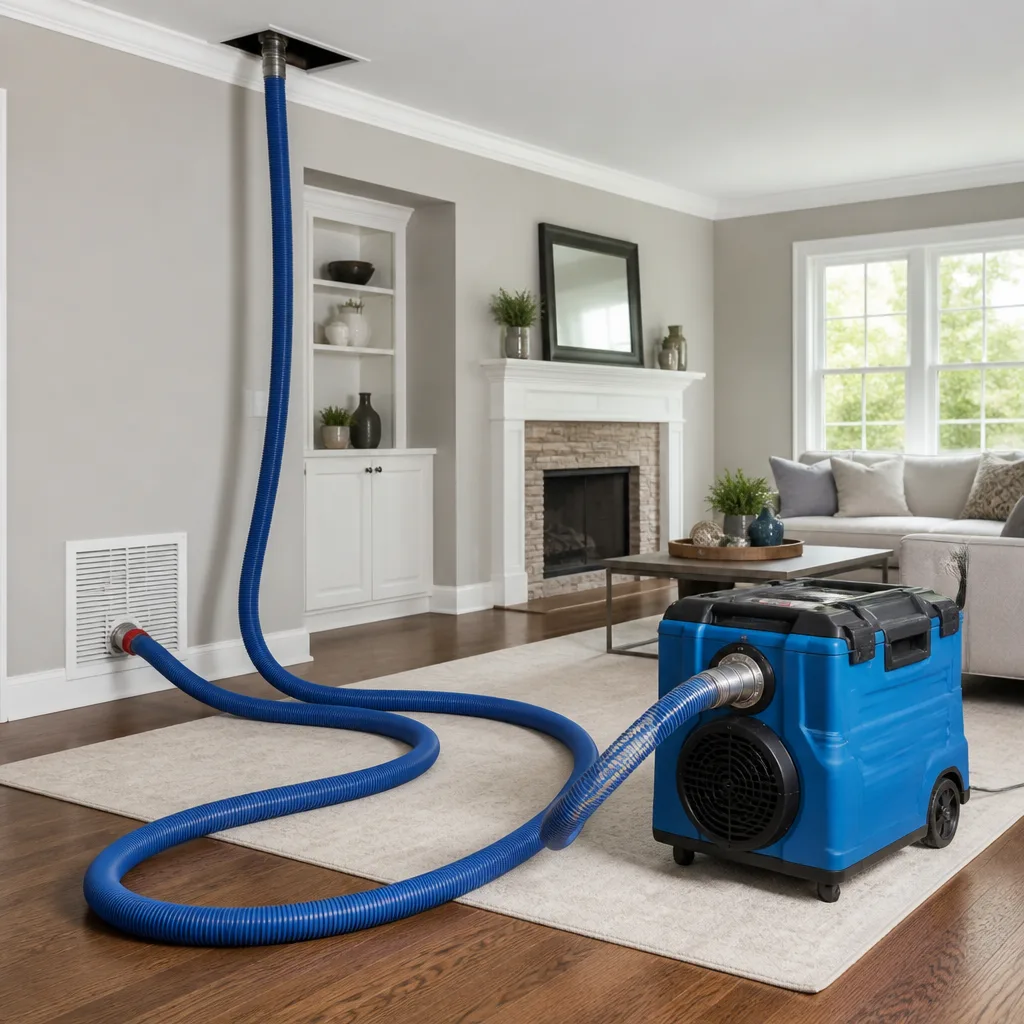 Whole-home duct cleaning
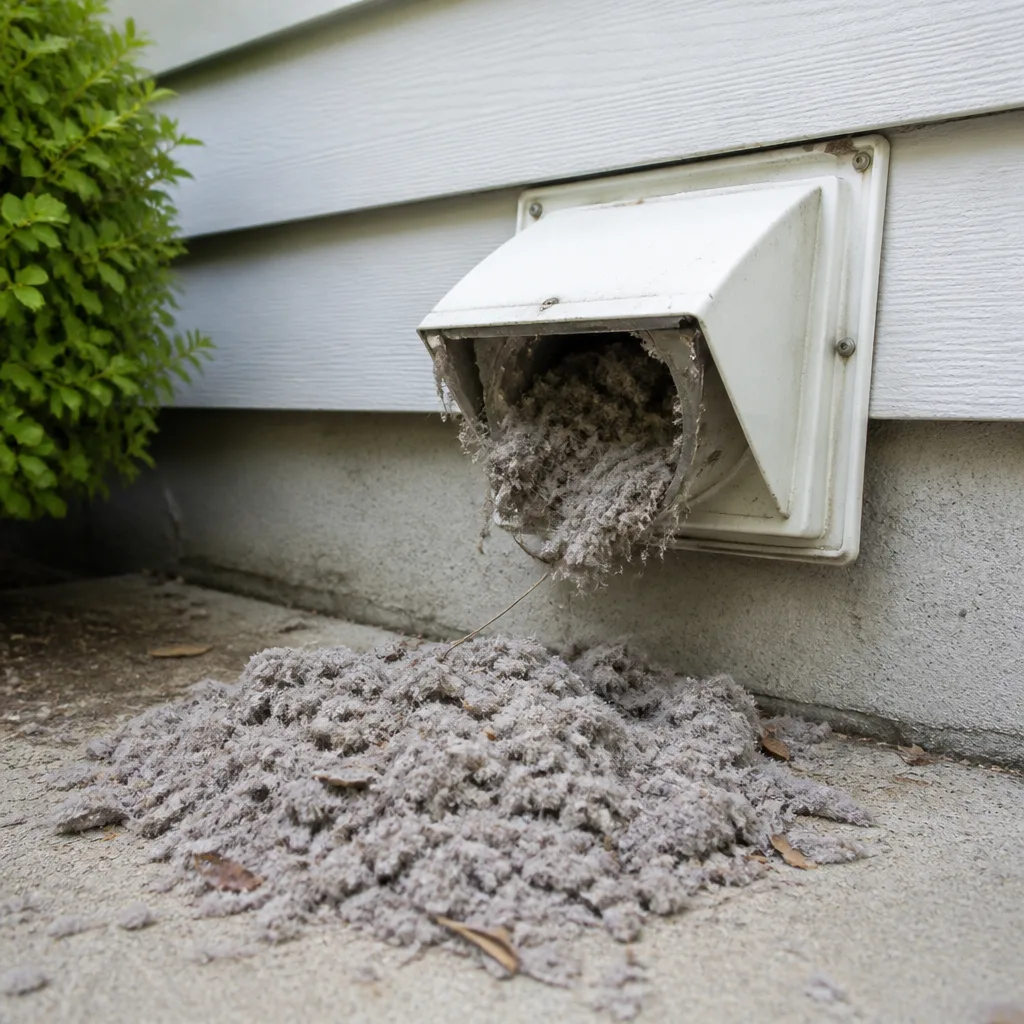 Dryer vent cleaning
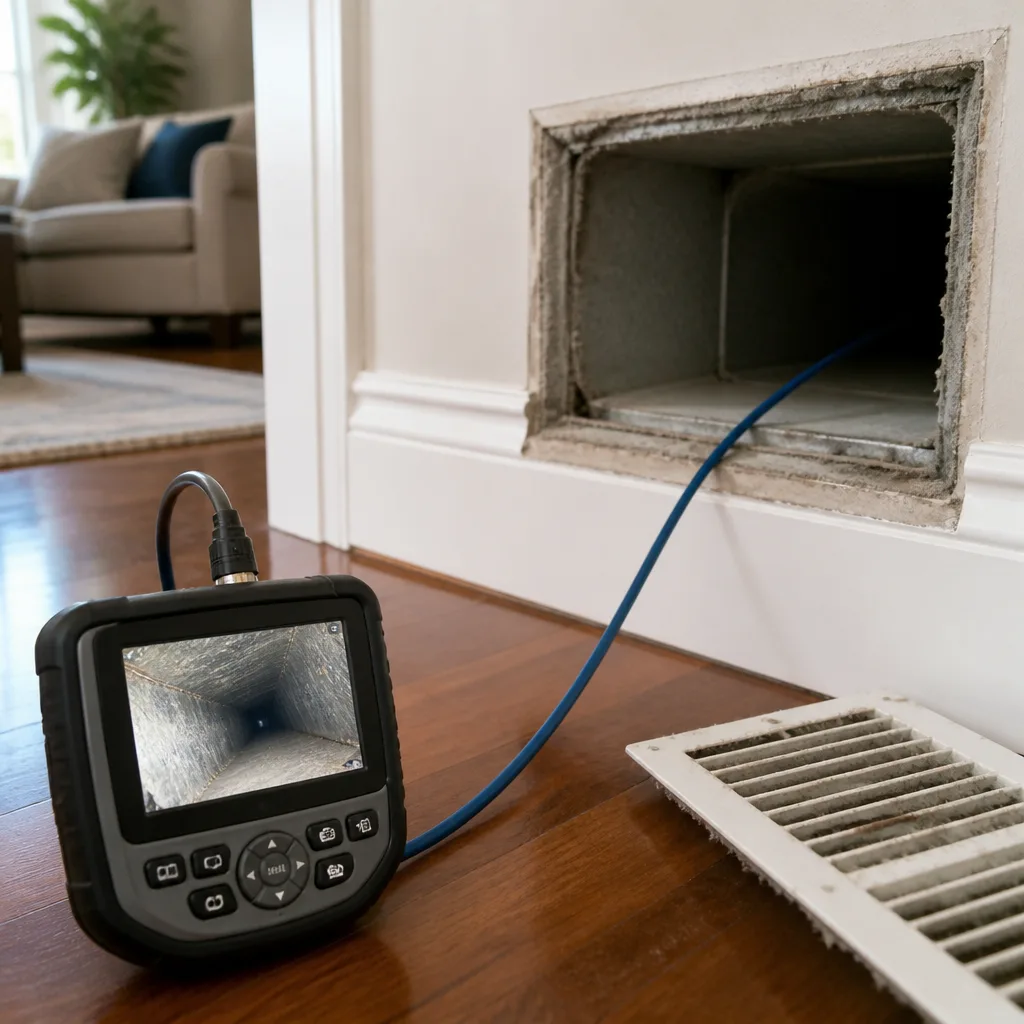 Camera inspection
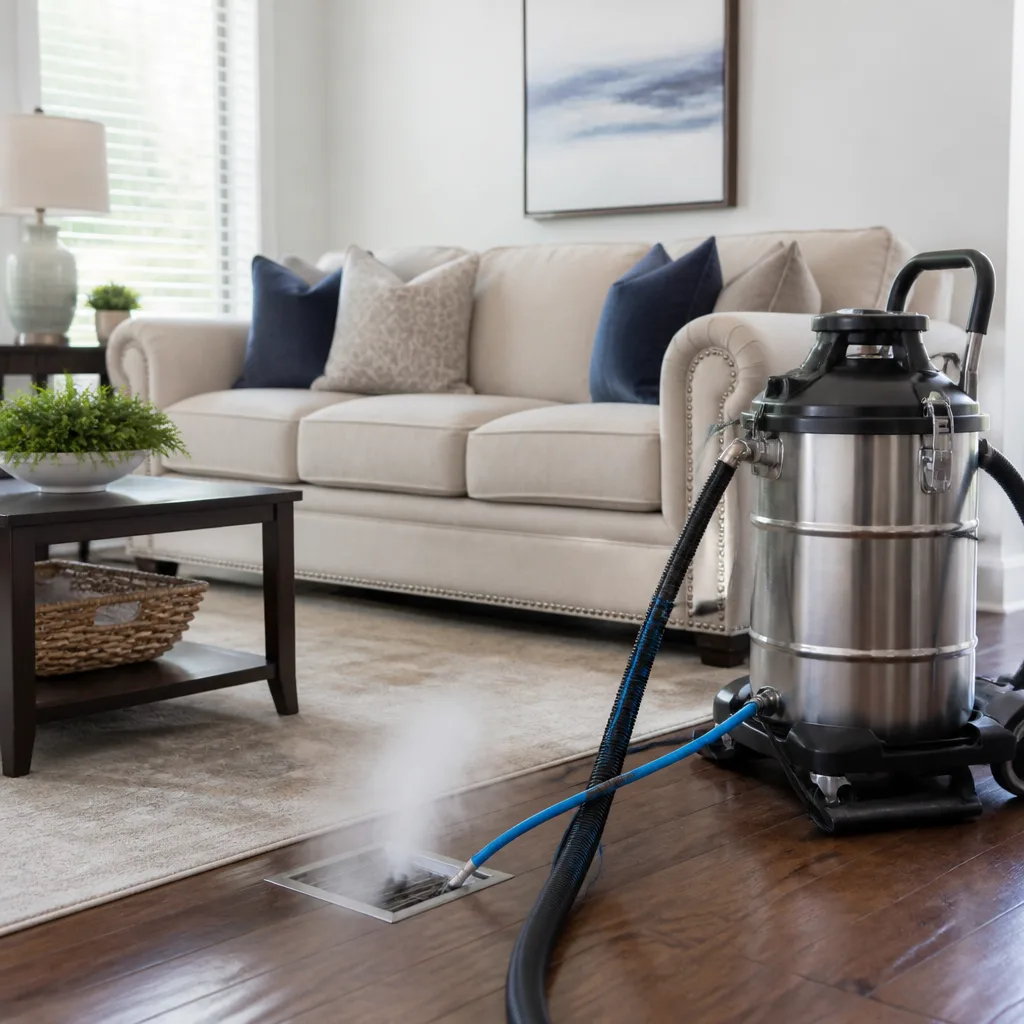 Sanitizing & deodorizing
Whole-system duct and dryer vent check with before-and-after photos - you see exactly what came out of your vents
That "$99 whole-house special" is a bait ad - the real number appears once they are in your hallway, or the "clean" is a shop-vac at the register. We photograph the inside of your ducts before and after instead.
Air Duct Cleaning Permits, Codes & Inspections in Inwood, NY: What You Need to Know
Most Inwood homeowners assume duct work never touches a permit. That’s true for the cleaning itself. It stops being true the moment a technician reconnects a disconnected section, cuts in a new access panel, or replaces flex duct with rigid pipe. The cleaning company that does both jobs in one visit may be performing regulated mechanical work without ever pulling a permit, and nobody notices until an inspector, a buyer’s engineer, or an insurer asks for documentation. This guide walks through what New York’s mechanical code actually says about duct alterations, where cleaning ends and permitted work begins, how HOA and co-op rules stack on top of city code, and how all of it surfaces during a home sale. If you own or manage property in Inwood, this is the paperwork layer behind the air quality work most people never ask about.
Quick Answer
Routine air duct cleaning in Inwood, NY generally does not require a permit because it is maintenance, not construction. Permits become necessary when the work alters the duct system itself: new or relocated duct runs, added access panels, sealing that changes the system’s configuration, duct liner replacement, or reconnection work tied to an HVAC change-out. New York City’s mechanical code governs most Inwood properties, co-op and condo boards add their own approval layer for shared systems, and verification of the contractor’s license for the specific scope matters more than most owners realize.
Styles & brands we work with
- Whole-home duct cleaning
- Dryer vent cleaning
- Camera inspection
- Sanitizing & deodorizing
Table of Contents
- Cleaning vs. Alteration: Where the Permit Line Falls
- What New York’s Mechanical Code Says About Ducts
- Inwood’s Permit Jurisdiction: NYC vs. Nassau County
- How to Verify a Contractor Is Licensed for the Scope
- What Inwood Co-op and Condo Rules Add
- How Unpermitted Duct Work Surfaces at Inspection and Resale
- What a Post-Work Inspection Should Confirm
Cleaning vs. Alteration: Where the Permit Line Falls
The clearest way to think about permits in duct work is to ask one question: after the job, is the system the same system it was before, only cleaner? If yes, it’s maintenance. If the answer is no, because the layout changed, a component was added, or the duct material was replaced, you’ve crossed into alteration territory, and alteration is where permits live.
Air duct cleaning at its core is debris removal. A technician runs negative pressure through the system with a truck-mounted or portable unit, agitates the duct walls with a rotary brush or air whip, and captures what comes loose. No structural change happens. No permit is required for this, and the same is true whether the system serves a single-family house or an apartment in a larger building. This is the work covered under air duct cleaning, and it’s what most Inwood homeowners actually need.
What crosses the line:
- New duct runs or relocated supply registers. Adding a run to a finished basement or moving a register changes the system’s design and typically triggers a mechanical permit.
- New access panels cut into ductwork or plenums. An access panel is a permanent addition, not a temporary opening, and many jurisdictions treat it as a system alteration.
- Duct liner replacement. The internal liner is a listed component with fire and air-quality ratings. Replacing it is a mechanical change.
- Sealing that reconfigures the system. Mastic sealing of existing joints is usually maintenance. Installing new rigid duct sections to replace sagging flex runs is not.
- Reconnection work tied to an HVAC change-out. When an air handler or furnace is replaced, the duct connections are part of the permitted mechanical work.
In our experience, the confusion happens because a single visit can involve both. A company cleans the ducts, notices a crushed run in the attic, and offers to fix it in the same appointment. The cleaning is fine. The fix is a different category of work. On the inspection report, only one of those shows up with a permit.
What New York’s Mechanical Code Says About Ducts
New York City’s mechanical provisions live within the NYC Construction Codes, and they address duct systems as permanent components subject to installation standards. Ducts must be sized, supported, and sealed according to the code, and changes to system design generally require a filing and permit. Routine maintenance, by contrast, falls outside the permit process because it doesn’t change the system’s characteristics.
The principles that matter most for homeowners:
- Duct systems are treated as part of the building’s mechanical infrastructure. They’re not appliances or furnishings. Modifying them is a construction act.
- Materials must be listed for the application. Flex duct, rigid pipe, and duct board each have permitted uses. Swapping one for another can be an alteration even when it seems cosmetic.
- Sealing is required at the design stage but isn’t separately permitted when done as maintenance. Sealing existing joints and seams with approved mastic is standard practice and doesn’t need a filing. Building new sealed assemblies does.
- Access for inspection must be provided. Duct systems need accessible points for maintenance and inspection. Adding those points may require a permit; using existing ones does not.
Here’s the part that most general web content skips: the code doesn’t care who does the work. It cares whether the work was done and whether the building department knows. An HVAC contractor pulling a permit for a system upgrade will typically cover the duct reconnections in that filing. A duct cleaning company that performs the same reconnections separately usually won’t, and that gap is where owners get into trouble.
We mention this as a design fact rather than a loophole. When we identify a disconnected section or a failing liner, our practice is to separate the cleaning from the repair, explain which side of the permit line each piece falls on, and let the owner decide how to file. That’s the honest approach, and it’s why the equipment we run (Rotobrush systems, Nikro vacuums, Abatement Technologies containment for negative pressure) matters less for permits than the scoping conversation that comes before the equipment is ever turned on.
Inwood’s Permit Jurisdiction: NYC vs. Nassau County
Inwood sits at the northern tip of Manhattan, and almost all of the neighborhood falls under New York City’s Department of Buildings jurisdiction. Single-family homes, walk-ups, and co-op buildings in Inwood file permits through NYC DOB, and mechanical work is reviewed under the Construction Codes. That’s the baseline.
The complication is geography. Inwood is a stone’s throw from the Bronx to the north and across the Harlem River from Nassau County’s western edge, and a few blocks’ difference can put a property under a different building department with different filing procedures. Before any permitted work, confirm the jurisdiction:
- Look up the property’s borough and block-lot number on the NYC Department of Finance property records, or confirm the county on a Nassau County property.
- Call the building department that has jurisdiction and ask whether the specific scope (duct reconnection, new access panel, liner replacement) requires a permit and what the filing class is.
- Ask whether the work qualifies as a minor alteration that can be filed under a simpler process, or a major alteration that needs full plan review.
- Get the answer in writing from the contractor if you’re not filing yourself. A permit number is a number. A verbal “you don’t need one” is not.
We don’t perform permitted mechanical alterations, and we’re clear about that. What we do is flag them. When an Inwood job involves a compromised run, a failed liner, or a reconnection that will require filing, our report says so, and the homeowner can engage a licensed mechanical contractor to do the filed portion. The cleaning itself we handle, and that’s the scope we’re equipped for. It’s a narrower claim than some competitors make, and it’s the accurate one.
How to Verify a Contractor Is Licensed for the Scope
New York licensing for duct and HVAC work is scope-specific. The license required for full mechanical system installation and alteration is different from the credential needed for cleaning, and a contractor’s license for one scope does not cover the other. A company can be perfectly legitimate at HVAC cleaning and not licensed to install or alter HVAC components. That’s normal. The problem is when the same company does the altering anyway.
How to check, in order:
- Ask for the license number that applies to the specific work. If the scope is cleaning, ask what credential covers it. If the scope is alteration, ask for the mechanical license.
- Verify through the issuing authority. In New York City, that’s typically the DOB’s licensing lookup or the state’s licensing database for trades that fall under it. The contractor should be findable by license number and by business name.
- Confirm insurance for the scope. A cleaning policy and an installation policy may differ. Ask for the certificate that names the work being performed and the property address.
- Read the proposal for what’s explicitly excluded. A good proposal tells you what the company will not do. If permit filing isn’t mentioned and alteration work is, ask why.
- Check that the proposal separates cleaning from repair. One line item for duct cleaning and another for any alteration work, with the alteration work scoped to whoever is licensed for it.
This matters because insurers ask precisely this question after a claim. If a fire or water intrusion traces back to duct work, the first thing an adjuster checks is whether the work was performed by someone licensed for that scope and whether permits were pulled if required. “The cleaning company did it” is not an answer that closes a claim.
What Inwood Co-op and Condo Rules Add
Inwood is heavy on co-ops and condos, especially along the corridors near the major avenues and the residential blocks running north toward the park. Shared mechanical systems in those buildings are governed by the board’s alteration agreement on top of city code, and the board’s rules are often stricter than the building department’s.
What boards typically add:
- Approval before work begins. Many boards require a written alteration request describing the scope, the contractor, and the insurance, submitted before any work starts.
- Contractor insurance and licensing documentation. Boards want the COI (certificate of insurance) naming the building as an additional insured, plus proof of licensing for the scope.
- Work hours and access rules. Boards often restrict when work can happen in the building and require advance notice to neighboring units.
- For shared duct systems, board coordination on any alteration. If the duct serves more than one unit or runs through common area, board sign-off is non-negotiable, and the alteration may require a filing regardless of what the standalone unit rules say.
- Building-specific air quality requirements. Some boards ask for sanitizing treatment scope and documentation, which is one reason we’ve built a named air quality service around Guardsman-compatible sanitizing and Aprilaire-compatible filtration accessories.
In our experience, boards aren’t the obstacle most owners worry about. The obstacle is starting work before the board knows. A written request with a clean scope, a certified insurance certificate, and a description of what the company is and isn’t licensed to do goes through quickly. A phone call after the fact doesn’t.
How Unpermitted Duct Work Surfaces at Inspection and Resale
Unpermitted alteration work tends to stay hidden until a transaction. That’s not a scare tactic, it’s a pattern. Inspectors during a home sale look at mechanical systems in ways that routine occupants don’t, and duct alterations leave traces: new flex runs spliced into old rigid trunk lines, access panels that don’t match the original tin work, mastic patterns that end abruptly at a joint, TYVEK tape in places tape shouldn’t be.
What happens when an inspector flags it:
- The buyer asks for documentation. A permit number and a sign-off from the building department settle the question. Without them, the buyer’s engineer will recommend a follow-up inspection by a licensed mechanical contractor.
- The lender may treat it as an open item. Unpermitted work that touches the building’s mechanical system can hold up a mortgage or reinsurance process.
- The seller has to choose between retroactive filing and price concessions. Retroactive filing for already-completed work is possible in most jurisdictions, but it involves opening walls or providing access for inspection, and it can be more expensive than doing it right the first time.
- The buyer’s insurance carrier asks questions. Mechanical alterations without permits can affect a new policy or trigger a higher premium.
The pattern is well enough known that we now lead scoping conversations with it. When we arrive for a cleaning in Inwood and see prior alteration work that clearly wasn’t filed, we say so on the report, in language the owner can hand to an attorney or a realtor. What we don’t do is perform alteration work ourselves to “clean it up.” That’s how the cycle repeats.
What a Post-Work Inspection Should Confirm
Whether your job was pure cleaning or involved a permitted alteration, the post-work inspection is where you find out what you actually got. For cleaning, the inspection is photographic and physical: before-and-after shots of the same duct runs, visible evidence that the containment was in place, verification that the blower and coil weren’t disturbed. For alteration, the inspection is the building department’s, and it should produce a signed-off permit.
What to confirm after a cleaning job:
- Before-and-after photos of interior duct surfaces, not just the vent covers. This is why we shoot the runs, not the grilles.
- Containment was used. Negative pressure equipment (we use Abatement Technologies units, the same class specified for containment practice) keeps debris out of the living space. Ask to see where it was set up.
- Any disconnected or crushed sections are documented. A written report is what you want, not a verbal warning as the technician walks out the door.
- The system was smoke-tested or visually verified after reconnection. A quick blower run isn’t sufficient proof of a sealed joint.
- Sanitizing scope is in writing. If you’ve elected air quality treatment, the product used and the areas treated should be documented, not described as “sanitized.”
What to confirm after a permitted alteration:
- Permit number is posted at the job and matches the filed scope.
- Final inspection has been requested and passed, with the sign-off in hand.
- As-built documentation for any layout change, especially if the sold property or future alteration depends on it.
- Insurance certificate on file naming the specific scope of work.
If a company can’t produce these for alteration work, that’s a signal. If they can’t produce the first list for cleaning, that’s a different signal, and it’s the one we hear most often from owners who came to us after a cheaper job.
Common Mistakes to Avoid
- Assuming the cleaning company is licensed for the repair. Cleaning and alteration fall under different scopes, and a license for one doesn’t cover the other. Ask for the specific credential before any reconnection work begins.
- Letting the same visit include alteration work without a separate proposal. If the technician offers to fix a crushed run “while we’re here,” ask which license covers that fix and whether it needs a permit. Get the answer before the work starts.
- Skipping the board approval in a co-op or condo. Inwood buildings almost always require a written alteration request before any mechanical work in a unit. Starting work before the board knows turns a routine job into a violation.
- Trusting a verbal “no permit needed.” Get it in writing, or confirm directly with the NYC DOB or Nassau County. The building department’s answer is the one that matters at resale.
- Not keeping the cleaning report with the closing documents. A documented cleaning history helps at sale and helps with insurance questions. A photo of a clean vent cover doesn’t.
- Assuming duct cleaning is the same as duct sealing. Cleaning removes debris. Sealing stops leaks and recontamination. On older Inwood buildings with original sheet-metal runs, both are often needed, and they’re different scopes.
- Ignoring dryer vent work because it feels separate from ducts. Dryer vent cleaning keeps lint from accumulating where it ignites, and we handle it as its own scope through dryer vent cleaning, not as an HVAC upsell.
See the difference
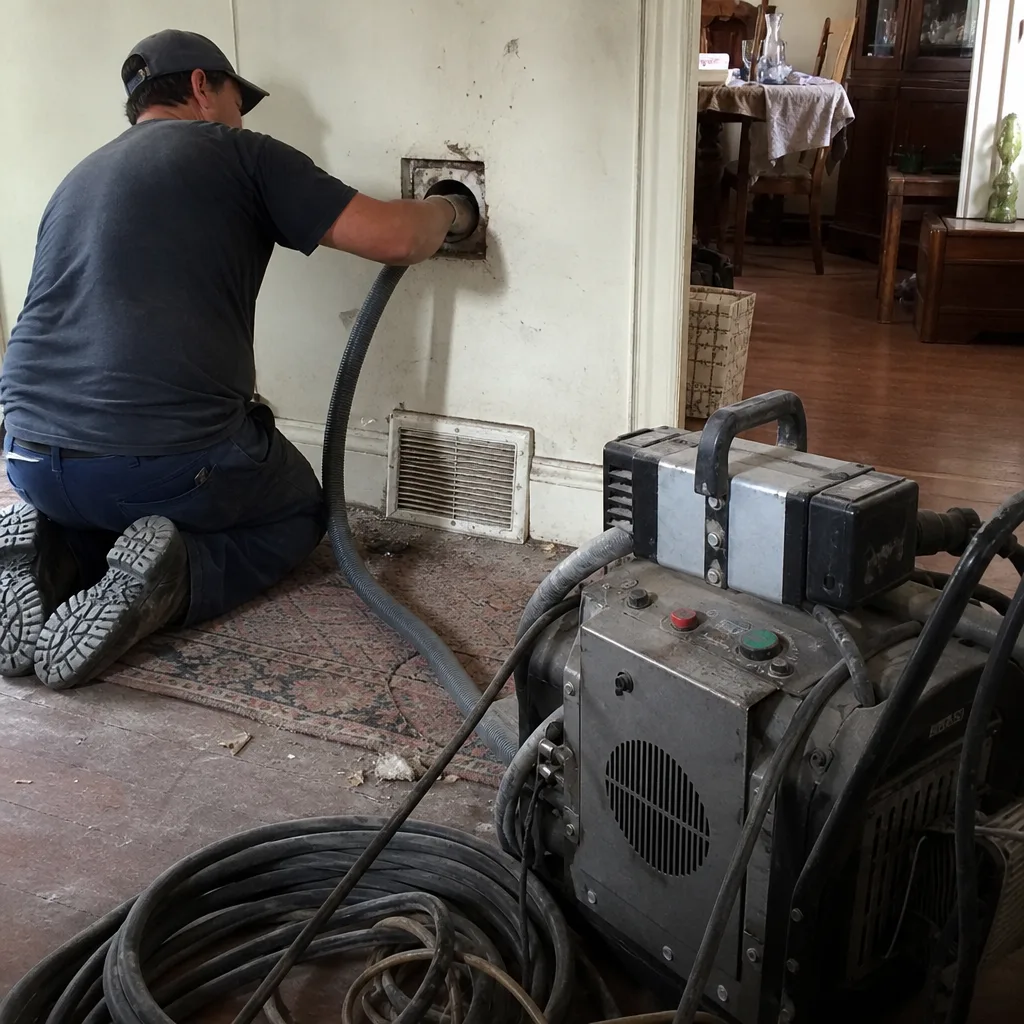 Before
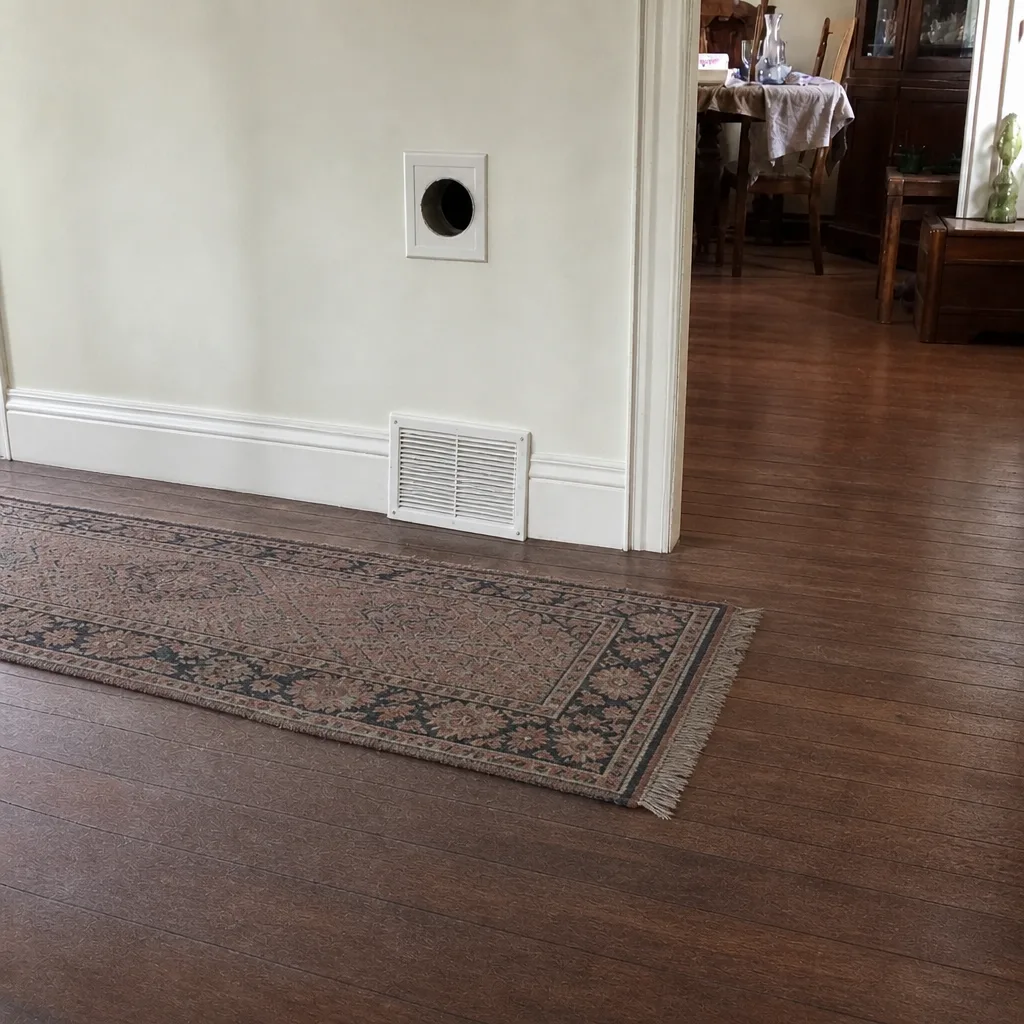 After
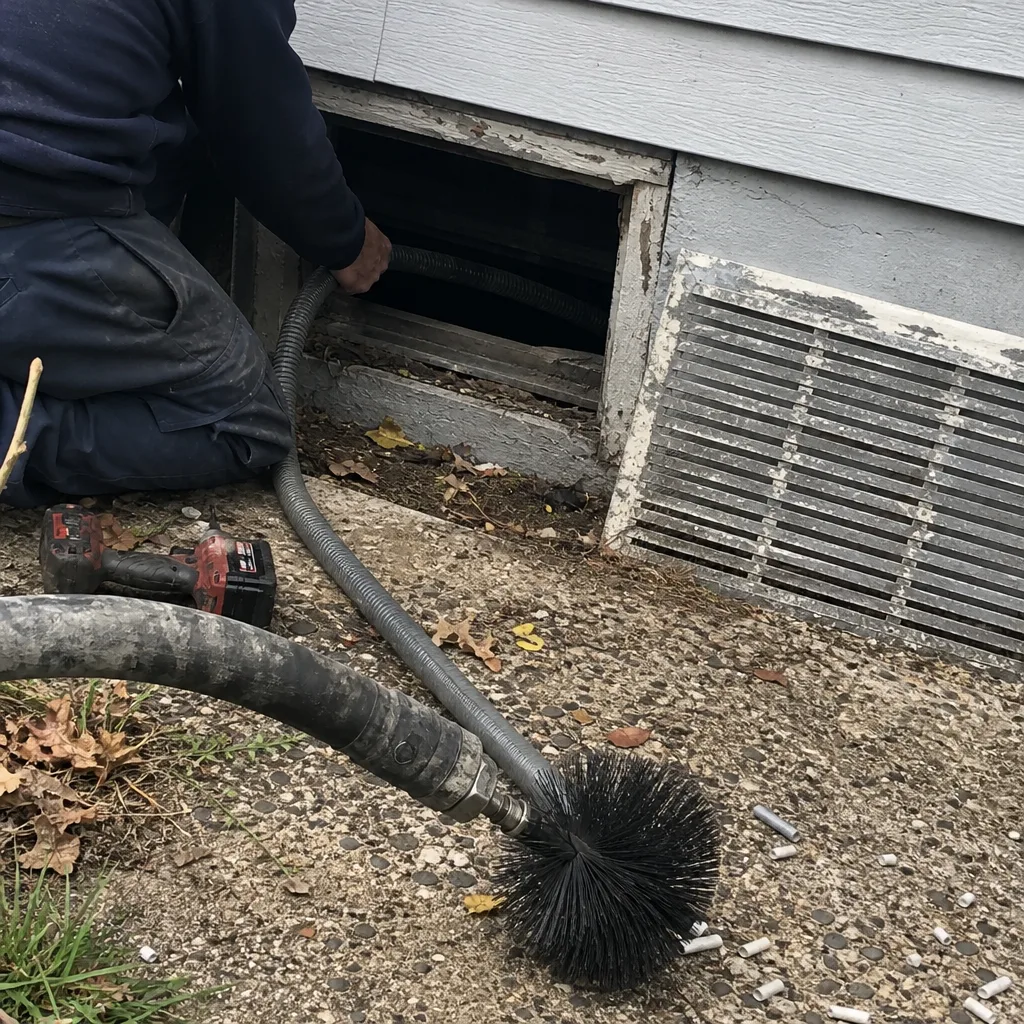 Before
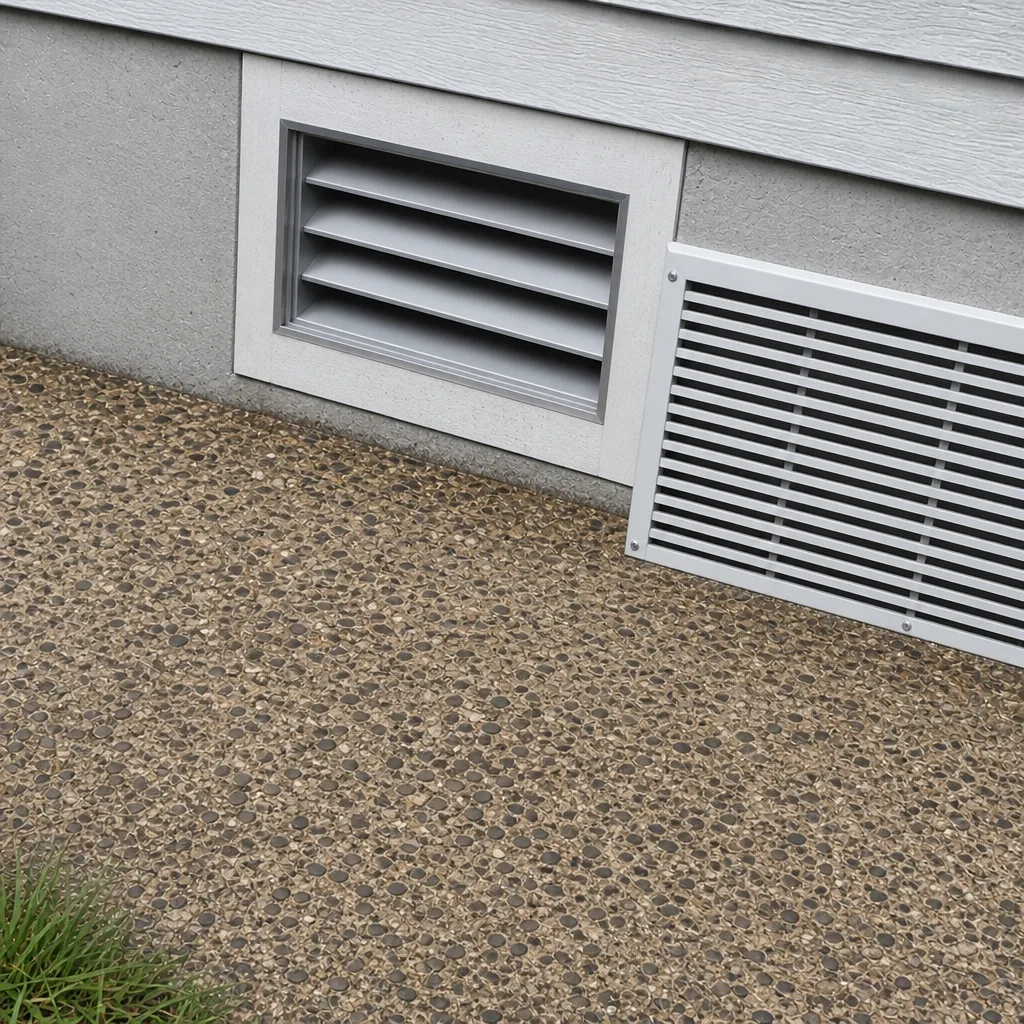 After
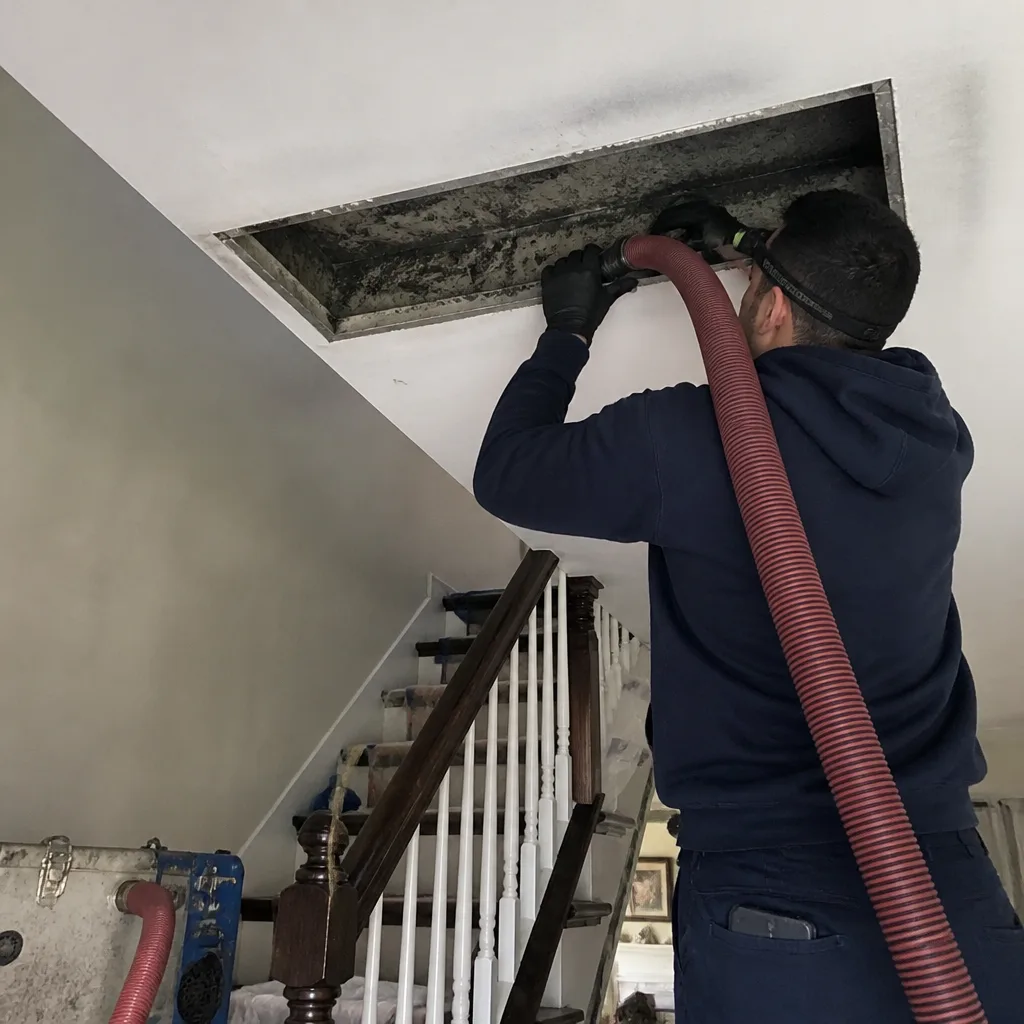 Before
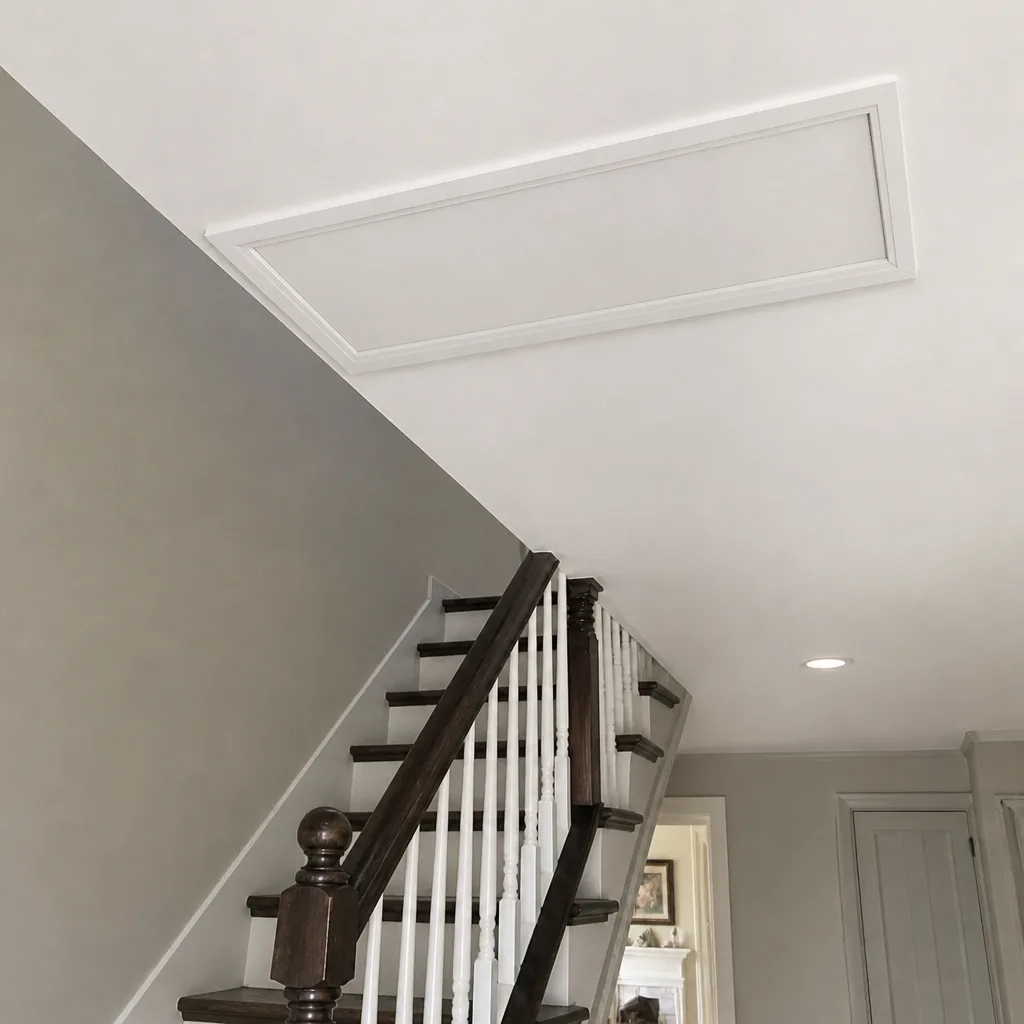 After
When to Call a Professional
Call when you’re unsure how the work splits between cleaning and alteration, because that determination decides what paperwork you need. Call when a home inspection flags duct work with no visible documentation. Call when the system has never been serviced, recent renovation dust is still circulating, or a musty odor has settled into a room and won’t leave with cleaning. Call if you’re in a co-op or condo and your board has asked for documentation on prior work. Call if it’s been more than a few years since the last cleaning and you don’t have a report. We can’t file mechanical permits, and we won’t pretend to. What we can do is tell you honestly what your system needs and what part of it requires a licensed mechanical contractor, generally with our technicians’ up to 8 years of experience checking the visible evidence. Air Duct Cleaning Inwood offers free estimates in Inwood. Call (855) 974-7305.
Frequently Asked Questions
No. Routine air duct cleaning in Inwood is maintenance and does not require a permit from the NYC Department of Buildings or Nassau County. Permits apply to alterations: new duct runs, added access panels, liner replacement, or reconnection work tied to an HVAC change-out. If a company tells you cleaning needs a permit, ask exactly what work they’re planning beyond cleaning. Call (855) 974-7305 for a free scope review.
Sealing existing joints and seams with approved mastic is maintenance and not separately permitted. Building new sealed duct assemblies, or reconfiguring the system’s layout during sealing, crosses into alteration territory and typically requires a permit. On older Inwood buildings with original ductwork, ask the contractor which category the specific sealing job falls into before work starts. Call (855) 974-7305 to walk through your system.
Ask for the license number that applies to the specific scope, then verify it through the NYC DOB’s licensing lookup or the state licensing database for the trade. A cleaning credential does not cover alteration work. If the company offers to repair disconnected sections, replace a liner, or add an access panel, ask which license covers that specific task and whether it’s covered in the proposal. Call (855) 974-7305 for a free estimate from a company that scopes clearly.
Yes, and often more. Boards in Inwood co-ops and condos usually require a written alteration request before work begins, plus a certificate of insurance naming the building and proof of licensing for the scope. For shared duct systems, board coordination is required regardless of whether the building department needs a filing. Getting board sign-off first is far simpler than resolving a violation. Call (855) 974-7305 to discuss your building’s requirements.
Usually, yes. Home inspectors during a sale look at mechanical systems in detail, and duct alterations leave visible traces: mismatched materials, spliced runs, access panels that don’t match original work. Without a permit and sign-off, the buyer’s engineer will typically recommend a follow-up inspection, and the lender may hold the transaction pending resolution. Call (855) 974-7305 if you need a documented cleaning report to pair with prior work.
Air duct cleaning in Inwood is priced per job by a written estimate, not per vent and not by a coupon figure. The exact range depends on system size, number of runs, accessibility, and whether the work includes sealing, sanitizing, or dryer vent cleaning alongside the ducts. We give you one flat price per system agreed before work starts, plus before-and-after photos of your own ducts so you can see the difference. Call (855) 974-7305. We answer 24/7. Fast dispatch from 7am to 7pm, Sunday through Friday.
The Bottom Line
Air duct cleaning itself in Inwood, NY is maintenance, and it doesn’t require a permit. The repairs, sealing, and reconnection work that often accompany cleaning do, and that distinction is the one most homeowners miss. Know where the line sits in New York’s mechanical code. Verify the contractor’s license for the specific scope, not just for cleaning. Get board approval in a co-op or condo before work starts. Keep your documentation, because it’s what a future buyer’s inspector will ask for. And if a proposal is vague about which work is which, treat that as your first clue. For a scoped, honest assessment of your system, call (855) 974-7305. We answer 24/7. Fast dispatch from 7am to 7pm, Sunday through Friday. Estimates are free.
Written by the team at Air Duct Cleaning Inwood.