
Last updated November 22, 2026
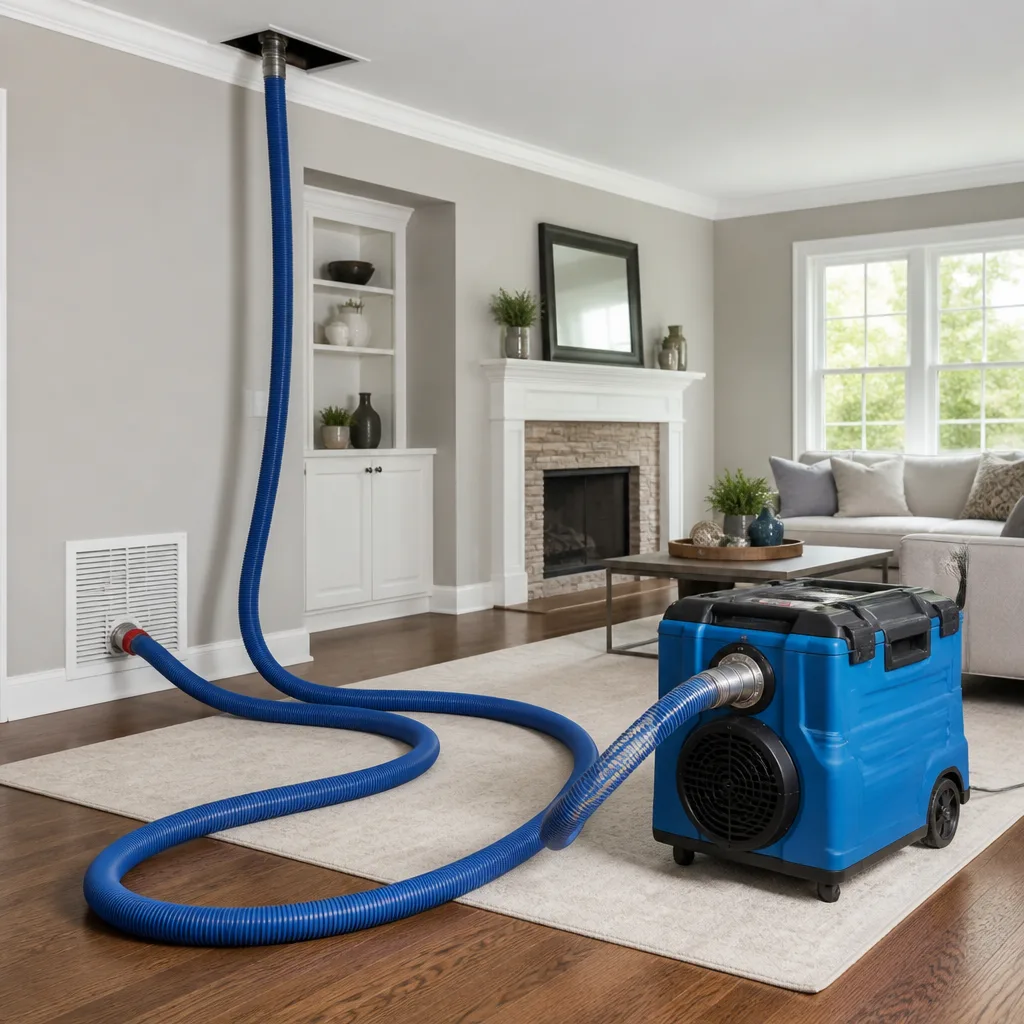 Whole-home duct cleaning
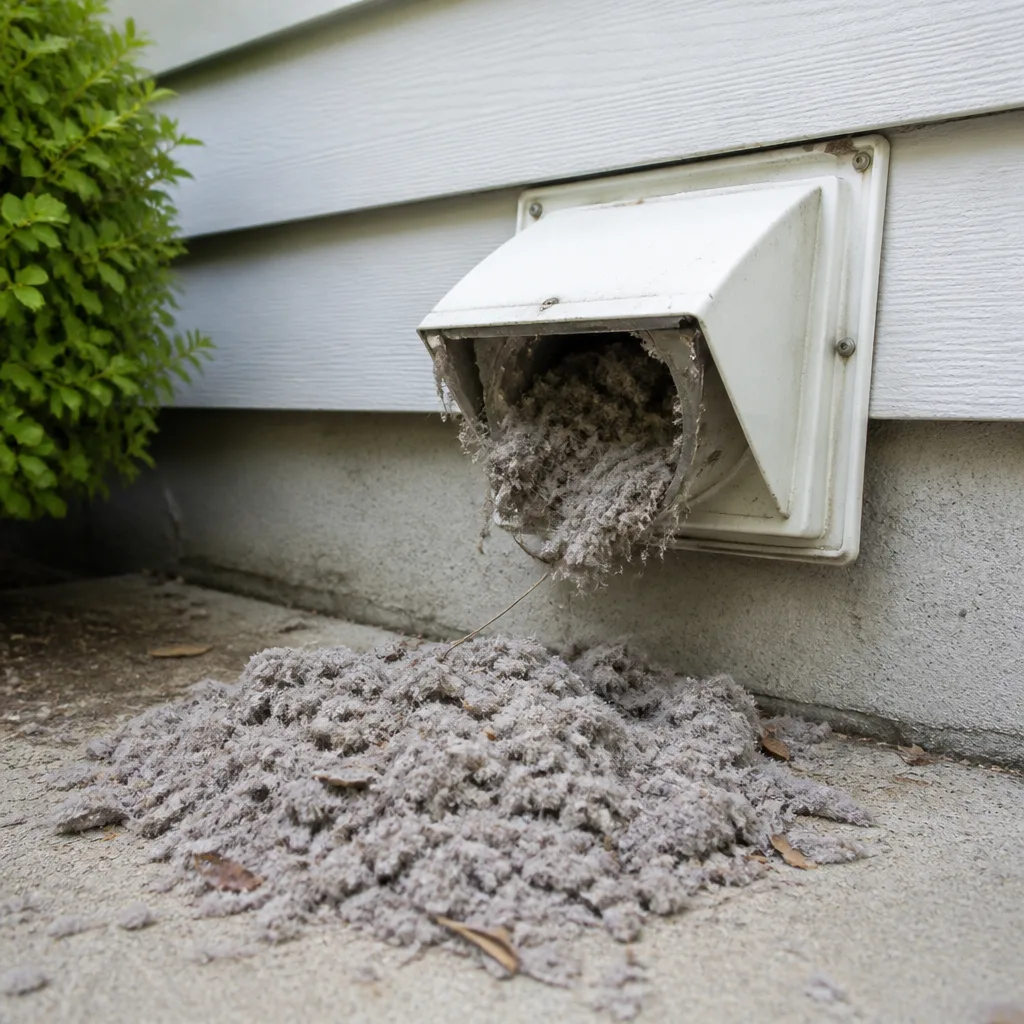 Dryer vent cleaning
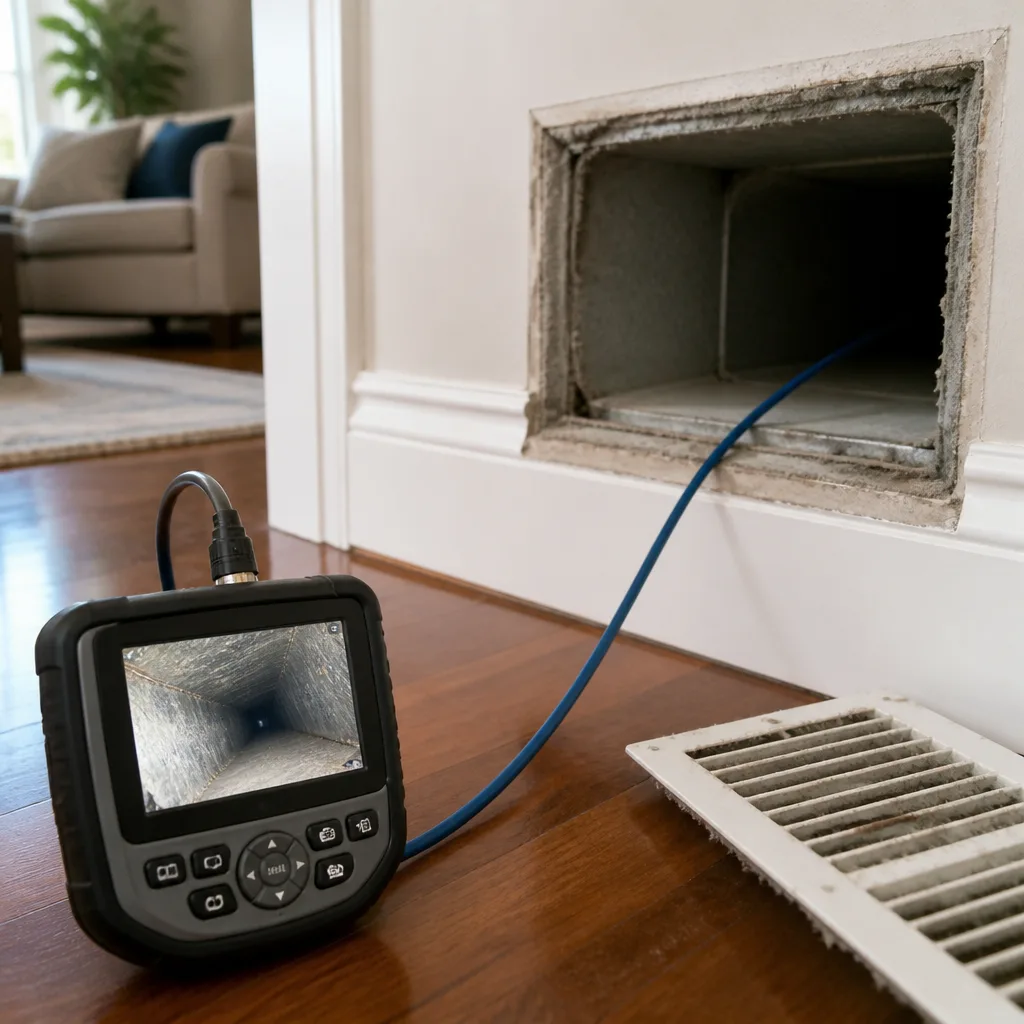 Camera inspection
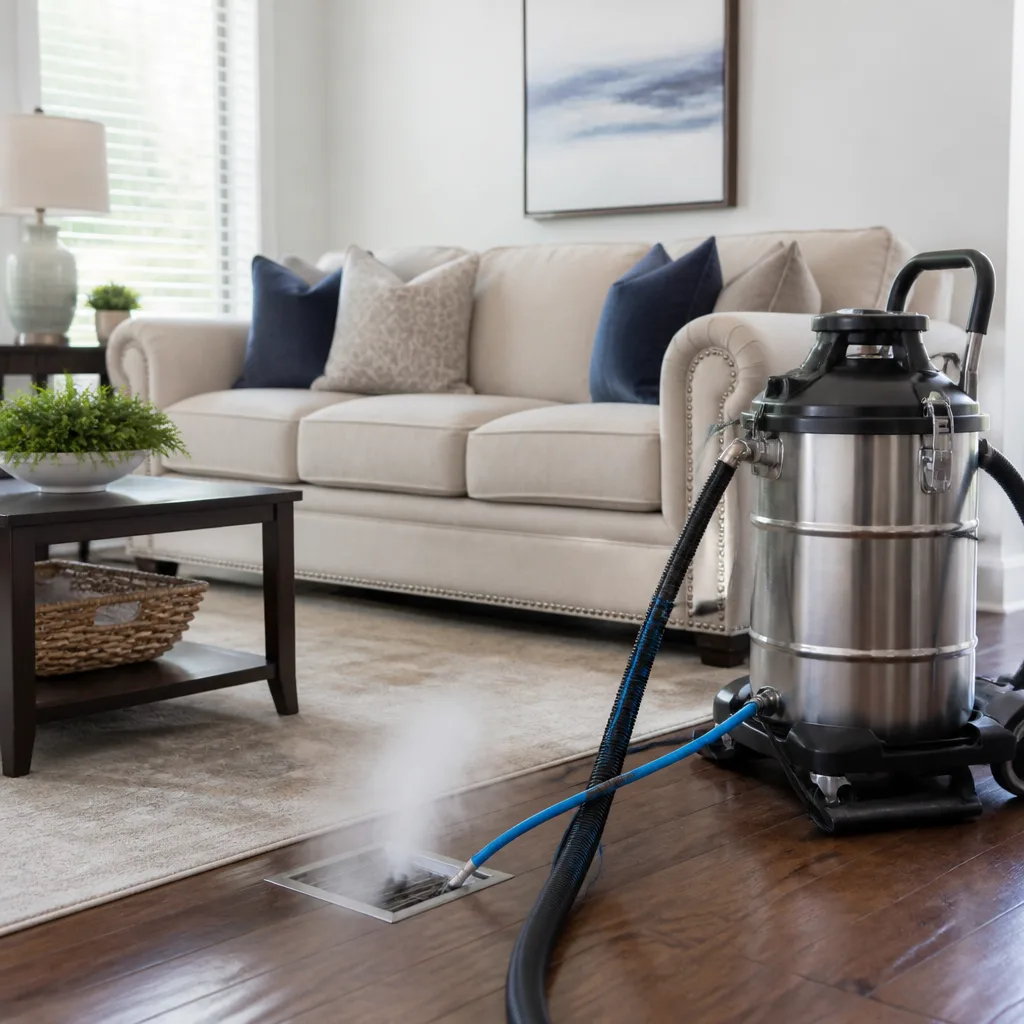 Sanitizing & deodorizing
Whole-system duct and dryer vent check with before-and-after photos - you see exactly what came out of your vents
That "$99 whole-house special" is a bait ad - the real number appears once they are in your hallway, or the "clean" is a shop-vac at the register. We photograph the inside of your ducts before and after instead.
Choosing the Right Air Duct Cleaning Brand: A Buyer’s Guide for Inwood
Most homeowners in Inwood shop for duct cleaning the way they shop for a plumber: scan the reviews, compare the quotes, pick the middle price. That approach works for a leaky faucet. It doesn’t work for duct cleaning, because the single biggest predictor of whether the job actually removes contamination is the equipment sitting inside the service vehicle, and two companies with identical five-star ratings can be running systems with completely different capabilities. One might use a continuous-contact rotary brush paired with HEPA extraction. The other might be dragging in a shop vacuum with a hose taped to the wand. The quirk is that both can leave your vents looking spotless from the floor. We wrote this guide to help Inwood homeowners read past the reviews and the coupon prices and ask the questions that separate a real air-pathway cleaning from a surface wipe-down.
Quick Answer
The right air duct cleaning brand in Inwood is the one that can name its equipment, explain the extraction method behind it, and match the tool to your home’s duct layout and contamination level. Look for professional-grade systems like Rotobrush for rotary agitation and Nikro or Abatement Technologies for negative-pressure HEPA extraction, ask for before-and-after photos of your own ducts, and insist on one flat price per system agreed before work starts. Brand names matter because they signal a specific engineering approach, not because they sound technical.
Styles & brands we work with
- Whole-home duct cleaning
- Dryer vent cleaning
- Camera inspection
- Sanitizing & deodorizing
Table of Contents
- Why Equipment Matters More Than the Star Rating
- How Rotobrush Systems Work: Continuous-Contact Rotary Brushing
- How Nikro Negative-Air Systems Work: High-CFM Source Removal
- When You Need the Combination Approach
- Truck-Mounted vs. Portable Equipment in Inwood Homes
- Questions to Ask Any Duct Cleaning Provider
- The Full Air Pathway: Why Five Services Connect
- How to Verify the Work Was Actually Done
Why Equipment Matters More Than the Star Rating
Duct cleaning has a quiet structural problem: some jobs look identical to the homeowner whether the ducts were cleaned or not. Dust that settled inside a flexible run ten years ago doesn’t announce itself when it stays put. A technician can run a hose over every supply register, take a photo of the vacuum head, and collect a check. The difference between that and a real cleaning is measured inside the duct, not at the grille.
That’s why the equipment stack is the honest tell. Professional duct cleaning systems are engineered around two jobs: agitate the contamination so it releases from the duct wall, then extract it under enough negative pressure that it never drifts back into the living space. Consumer vacuums fail both tests. They agitate weakly and they leak dust from seams, gaskets, and filters.
When we look at an Inwood home, the equipment tells us more than a review count does. Consider what a shop-vac rig can and cannot do:
- Airflow: Consumer vacuums move far less cubic feet per minute than source-removal systems, so loose dust in a long trunk line gets stirred up but not carried out.
- Filtration: Shop vacuums typically vent fine particles back into the room. HEPA-rated extraction traps them.
- Containment: Professional systems create negative pressure in the duct so the workspace stays clean. A shop vac does the reverse.
- Reach: Rotary agitation tools navigate bends and reduce the vacuum’s blind spots. A bare hose often leaves the top and sides of a duct untouched.
The Inwood housing stock makes this a bigger deal than it sounds. Many of the apartment buildings and older two- and three-family homes here have long, branching duct runs that turn sharply and drop behind walls. Contamination collects in the low points and the returns, exactly where a weak vacuum can’t pull it free. More on how we think about the whole system is on our Air Duct Cleaning Inwood page, but the short version is that equipment choice is a structural decision, not a cosmetic one.
How Rotobrush Systems Work: Continuous-Contact Rotary Brushing
Rotobrush is the name most associated with the rotary brush method in residential duct cleaning, and its design is easy to understand once you’ve seen it. A flexible cable drives a spinning brush head through the duct while a vacuum hose extracts loosened debris at the same time. The brush stays in continuous contact with the duct wall, which is the key part.
Picture a spinning brush moving down the inside of a flexible duct. It brushes the full circumference, not just the bottom where dust settles, and the vacuum pulls what it loosens straight out. That combination of mechanical agitation and integrated extraction is why certified air-system specialists use it for routine residential cleaning. It cleans well when:
- The ducts are flexible or rigid, with moderate contamination.
- Trunk and branch runs have normal residential geometry, with manageable bends.
- You’re addressing settled dust, pet dander, renovation debris, and everyday debris buildup.
- Duct shape allows the brush head to reach and rotate freely.
Where the geometry limits apply is important. Rotary brushing works best when the tool can maintain contact, which means long straight runs are easy but a sharp 90-degree elbow, a deeply recessed boot, or a duct that snakes through a tight chase is a challenge. Very large trunk systems can also outscale the brush, which is where the source-removal approach with a high-CFM port comes in. Rotobrush systems are also size-dependent; a portable unit is more at home on a standard Inwood two-bedroom than on a whole-building central system with 20-plus branches.
The right way to read a Rotobrush claim is to ask what the brush head actually covers. If a company says they use Rotobrush, ask whether they also run a source-removal vacuum on the trunk. A rotary brush without proper extraction agitates the dust but doesn’t remove it.
How Nikro Negative-Air Systems Work: High-CFM Source Removal
Nikro systems are the other half of the equation, and their functional purpose is different. Where Rotobrush is built for wall agitation, a Nikro negative-air setup is built for bulk extraction. You attach a high-CFM vacuum to the duct system, open one register as the working port, and draw air through the entire run under controlled negative pressure. HEPA filtration keeps the exhaust clean, so what leaves the duct doesn’t become the next problem in the room.
That approach matters most when the contamination is heavier than routine dust. Think about renovation cleanup in an Inwood prewar apartment, where drywall dust and construction debris have settled into a return duct. Or a musty smell that never quite goes away, which usually points to microbial growth in a damp section of ductwork. Or a property that’s sat vacant through a hot summer. For those, high-CFM source removal with HEPA filtration is the preferred method because it evacuates the duct instead of redistributing the load. A comparison guide from Abatement Technologies, whose source-removal equipment we also use, is emphatic on the point: the object is to draw contamination out under containment, not to blow it into the living space.
What Nikro does especially well:
- Deep pulls on long trunk lines: high cubic feet per minute moves the air column and removes fine particulate that lighter systems leave behind.
- Containment: HEPA filtration keeps exhaust clean, which matters in a tight Inwood co-op where the neighbor’s return shares a wall.
- Contamination events: after renovation, water intrusion, or long vacancy, source removal is the right protocol.
What it does less well is mechanical agitation. A negative-air system pulls loose dust but does nothing to the dust stuck to the duct wall. That’s why the next section matters.
When You Need the Combination Approach
Here’s the part most homeowners never hear: the correct protocol in the vast majority of Inwood homes is both methods, run as one job. A rotary brush loosens contamination that’s bonded to the duct wall. A high-CFM source-removal vacuum captures it and keeps it out of the air. Either one alone leaves part of the job unfinished.
If you’re evaluating a provider, here’s how to ask:
- “Do you agitate the duct walls, and with what tool?” If the answer is “we use a vacuum hose,” that’s a red flag. You want a rotary brush or a compressed-air agitation tool.
- “What’s your extraction airflow?” Ask whether the system runs at the cubic-feet-per-minute level of a source-removal unit, not a consumer vacuum.
- “Do you run both mechanisms on the same visit?” The correct answer is yes, with the brush running at each register while the source removal pulls on the trunk.
- “How do you handle branches that the brush can’t reach?” Good answers mention compressed-air whips, extended-reach tools, or manual access through a sealed port.
- “What containment do you set up before the work starts?” Negative pressure, sealed ports, and HEPA filtration are the answers you’re listening for.
We’ve seen the gap both ways. A rotary-brush-only visit leaves the trunk lines carrying fine debris that should have been pulled out. A source-removal-only visit leaves the wall-bound contamination for the next time someone turns on the heat. When a provider walks in with both, and can talk about why the order matters, you’re talking to the real thing.
Truck-Mounted vs. Portable Equipment in Inwood Homes
The question of truck-mounted versus portable equipment is one of the least discussed in the residential duct cleaning trade, and it matters a lot in Inwood. A truck-mounted system delivers very high airflow and a deep vacuum from a service vehicle parked at the curb; the hose runs through a window or service door. A portable system carries its own vacuum unit, which has less raw airflow but can go places a truck can’t.
In a single-family home with a driveway and a service entrance, truck-mounted makes sense for big trunk runs. In Inwood’s density, that’s rarely the layout. Many homes are in multi-family buildings, walk-ups, co-ops, and converted brownstones where parking at the curb is a genuine problem and running a 2-inch hose up three flights isn’t practical. Portable Nikro and Abatement Technologies units hit their stride here because they fit through the door, set up inside, and still pull at professional source-removal airflow.
The size of the home shapes the choice too. Larger apartment buildings and multi-unit properties have duct systems with multiple trunks and returns that need a full-port plan, not a single hose run. A portable rig with a well-planned port schedule does the job. A truck on the street curb with no access to the trunk main on the third floor simply can’t.
What should you ask?
- “Truck or portable, and why?” A good technician will give you an answer based on your building, not a generic script.
- “How many access ports will you cut?” Ports are cut where they need to be, sealed afterward, and never invented.
- “Can your equipment reach the top floor and the return trunk?” If not, the cleaning is half done before it starts.
- “Do you use the same equipment brand on every job?” Consistency in equipment means the technician knows the machine’s limits.
Honest answer: the right machine for your Inwood home depends on your building. Ask the question and see if the answer is specific to your layout.
Questions to Ask Any Duct Cleaning Provider
Most duct cleaning complaints trace back to the same root: the homeowner didn’t know what to ask. Here’s the list we have in mind whenever we quote a job. You should have it too.
- What systems are in your equipment stack, by brand? “Rotobrush, Nikro, and Abatement Technologies” is a specific answer. “Professional-grade” is not.
- How old is your main vacuum unit? Equipment ages. Newer units hold HEPA performance; older ones wear gaskets and filters. Ask when the machine was last serviced.
- Is your HEPA filter certified, and to what standard? HEPA filters differ. Ask for the filtration rating and how often the filter is replaced.
- Can you show me vacuum pressure readings before and after? A real source-removal setup can show measured negative pressure at the working port. This is one of the best evidence points.
- What’s included in the flat price per system? Ask what “system” means in their quote. It should mean every supply register, every return, and the accessible trunk. If they price per vent, ask why.
- Will I get before-and-after photos of my own ducts? Not stock photos. Yours.
- What’s your process if you find a breach, a disconnected joint, or mold growth? The answer should mention duct repair and sealing, or air quality sanitizing, not just “we’ll note it.”
- What containment do you set up before work starts? Look for negative pressure and sealed ports.
Ask these before you book. A provider who can’t or won’t answer them is telling you something useful. For more detail on what a professional-grade job looks like, our overview of air duct cleaning covers the full process, from inspection through verification.
The Full Air Pathway: Why Five Services Connect
Duct cleaning in isolation fixes one problem in one part of the system. Inwood homes, especially older buildings, usually have more than one. The full air pathway runs from the return grille to the air handler to the supply trunk to each register, and then separately through the dryer vent and the outdoor exhaust. When you think in those terms, the services line up logically.
- Air ducts: the supply and return runs, where dust, debris, and allergens collect.
- Dryer vent cleaning: the exhaust line from the dryer, which is a leading cause of residential fires when lint builds up and restricts airflow. This is a real safety service, not an HVAC upsell. Details are on our dryer vent cleaning page.
- HVAC unit cleaning: the blower, coil, and cabinet, all of which collect what the ducts carry. Covered on our HVAC cleaning page.
- Duct repair and sealing: the breaches that let in unfiltered air, waste energy, and recontaminate a freshly cleaned system.
- Air quality sanitizing: the treatment of microbial contamination, allergens, and odor at the source, using treatments we apply with Guardsman-grade products. Compatibility with trusted whole-home air quality platforms like Aprilaire and Honeywell matters here, because sanitizing needs to work with your existing system, not against it.
We work all five because they’re the same job in the sense that matters. A duct cleaning that leaves a torn flex run, or a return duct that pulls in attic or wall-cavity air, will look clean on the day of the visit and be dirty again in a few months. One call covers it all, and you don’t need a second contractor for the part that another company left behind.
How to Verify the Work Was Actually Done
Verification is the step most homeowners skip, and it’s where a real provider separates from a coupon price. The job isn’t done when the technician says it is. It’s done when you can see it.
Here’s what a fair verification process looks like:
- Before-and-after photos of your own ducts, taken at the same register or port each time. You should receive these before the team leaves.
- Vacuum pressure readings at the working port, before and after. Real source-removal systems can produce these. If the technician can’t, ask why.
- A sealed-port check. Any access port that was cut to reach a duct run should be sealed, with verification.
- A written summary of what was found. A breach in a flex run, a disconnected joint behind a wall, mold growth in a damp return; these should be documented, and any remediation quoted in writing.
- Sanitizing applied and confirmed if the treatment was part of the quote.
People hesitate about this trade for a good reason. Bait-and-switch pricing is real, and duct cleaning has a reputation for it. Our answer is one flat price per system, agreed before work starts, no per-vent pricing, and before-and-after photos of your own ducts. It’s the reason we say you’ll see the difference before we leave, not take our word for it.
Common Mistakes to Avoid
- Choosing on price alone. A quote much lower than the rest is usually a per-vent price that grows once the technician is inside. Ask for a flat price per system, and walk if they won’t give one in writing.
- Booking a company that can’t name its equipment. “We use professional-grade equipment” is a script. “We use Rotobrush and Nikro systems” is a brand and a method. Ask.
- Skipping the dryer vent. Many Inwood homes have their dryer vent routed through a long wall cavity. Lint can pack into that run over years. If you’re already having your ducts cleaned, add the dryer vent to the same visit.
- Cleaning a system with a breach. A disconnected joint in an Inwood brownstone’s return duct will recontaminate the entire system in a few months. Ask whether sealing is checked as part of the job.
- Assuming sanitizing is included. Cleaning removes debris. Sanitizing addresses microbial contamination and odor. They’re separate steps. Ask which one you’re buying.
- Not verifying. No photos of your own ducts, no pressure readings, no written summary. That’s a job that gets paid for but not shown. Ask before booking.
- Booking a cleaning based on a review count and nothing else. Reviews tell you whether previous customers were happy. They don’t tell you what equipment was on the truck. Both matter.
See the difference
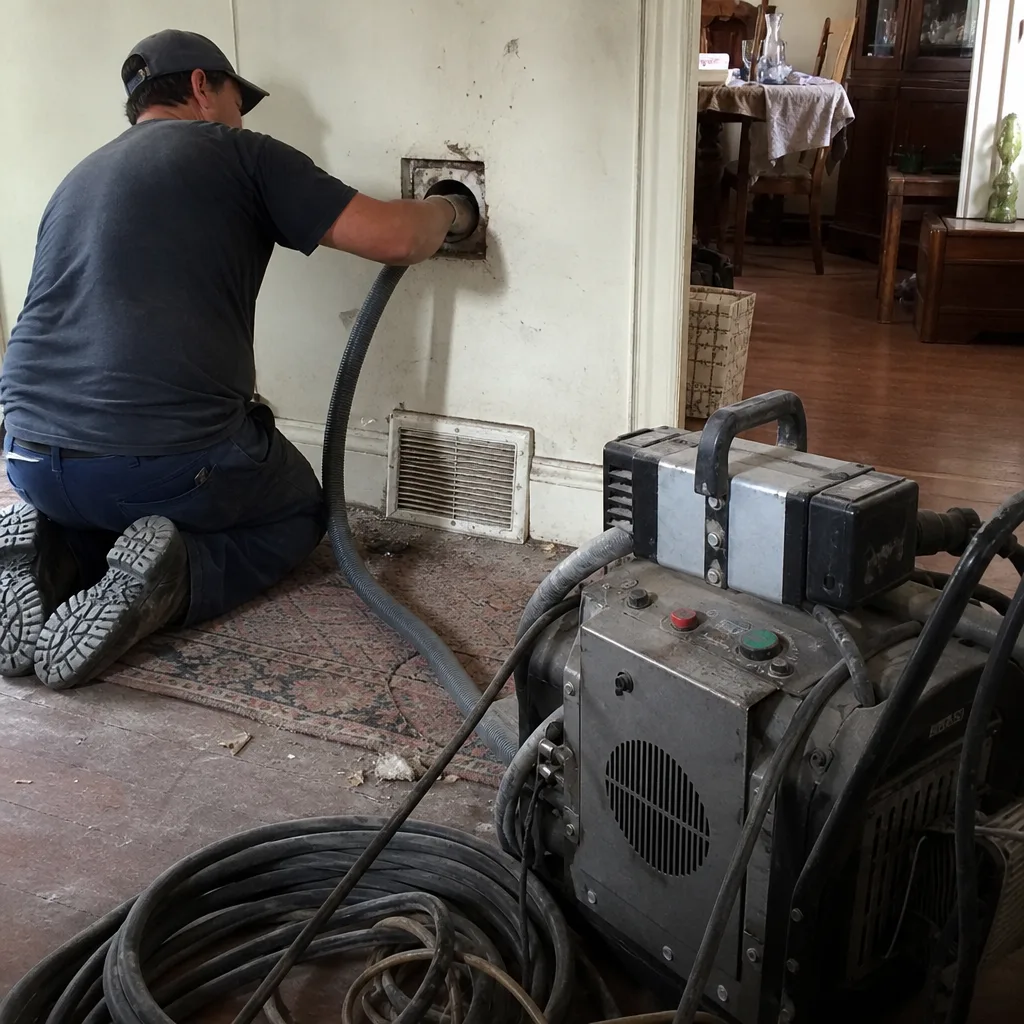 Before
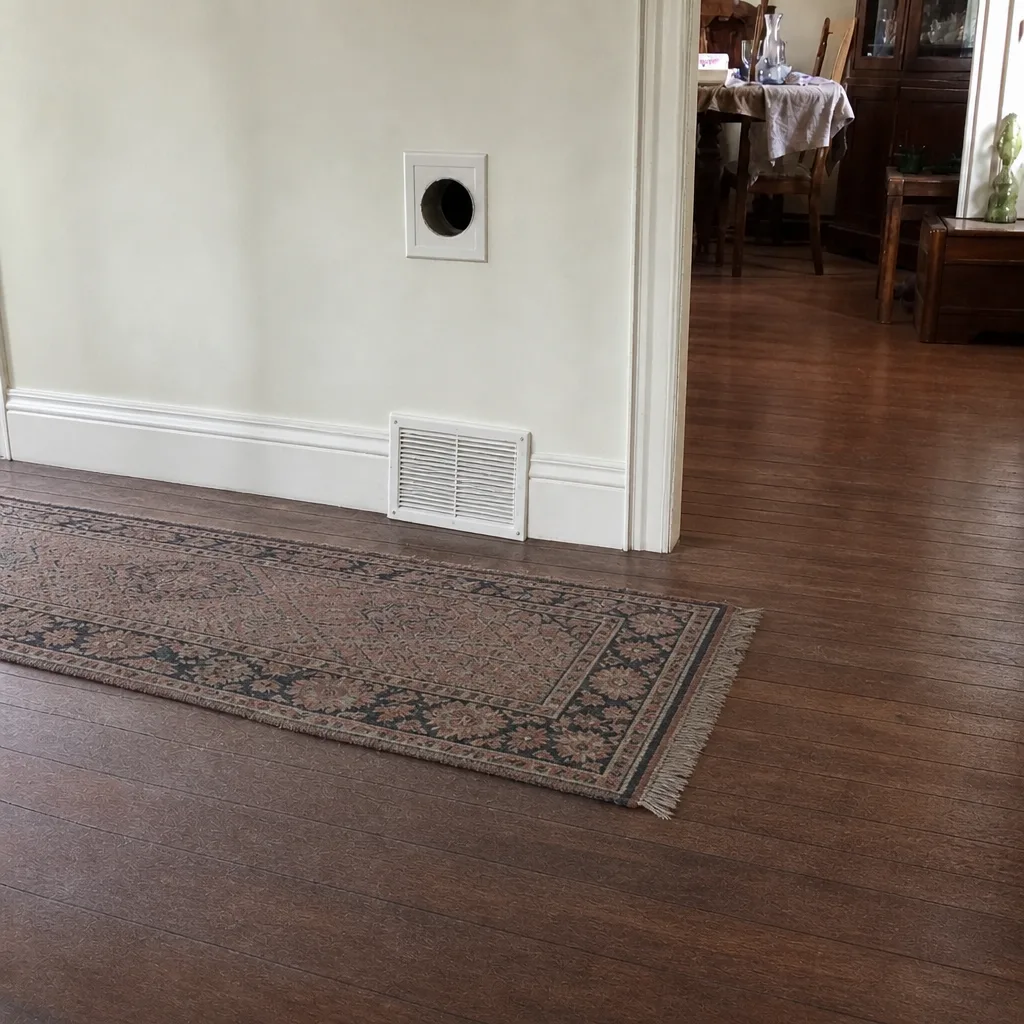 After
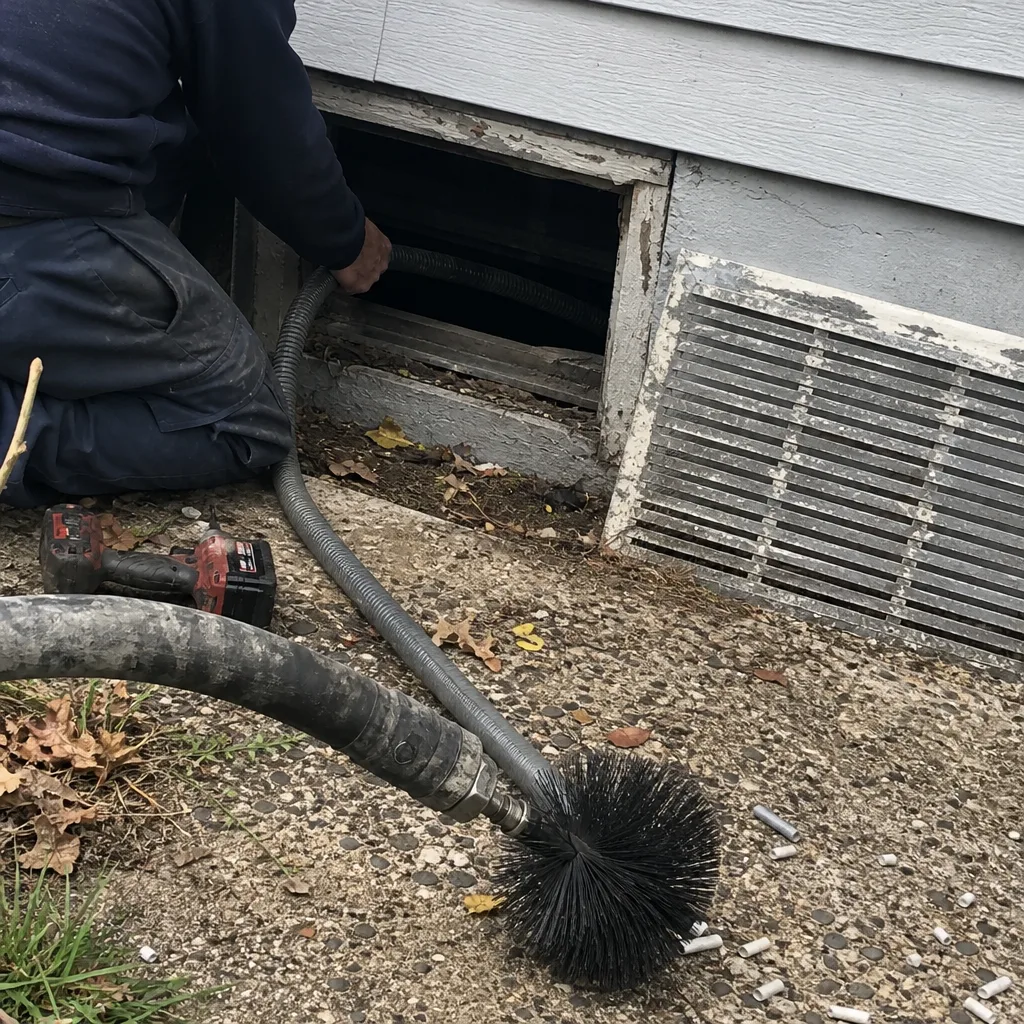 Before
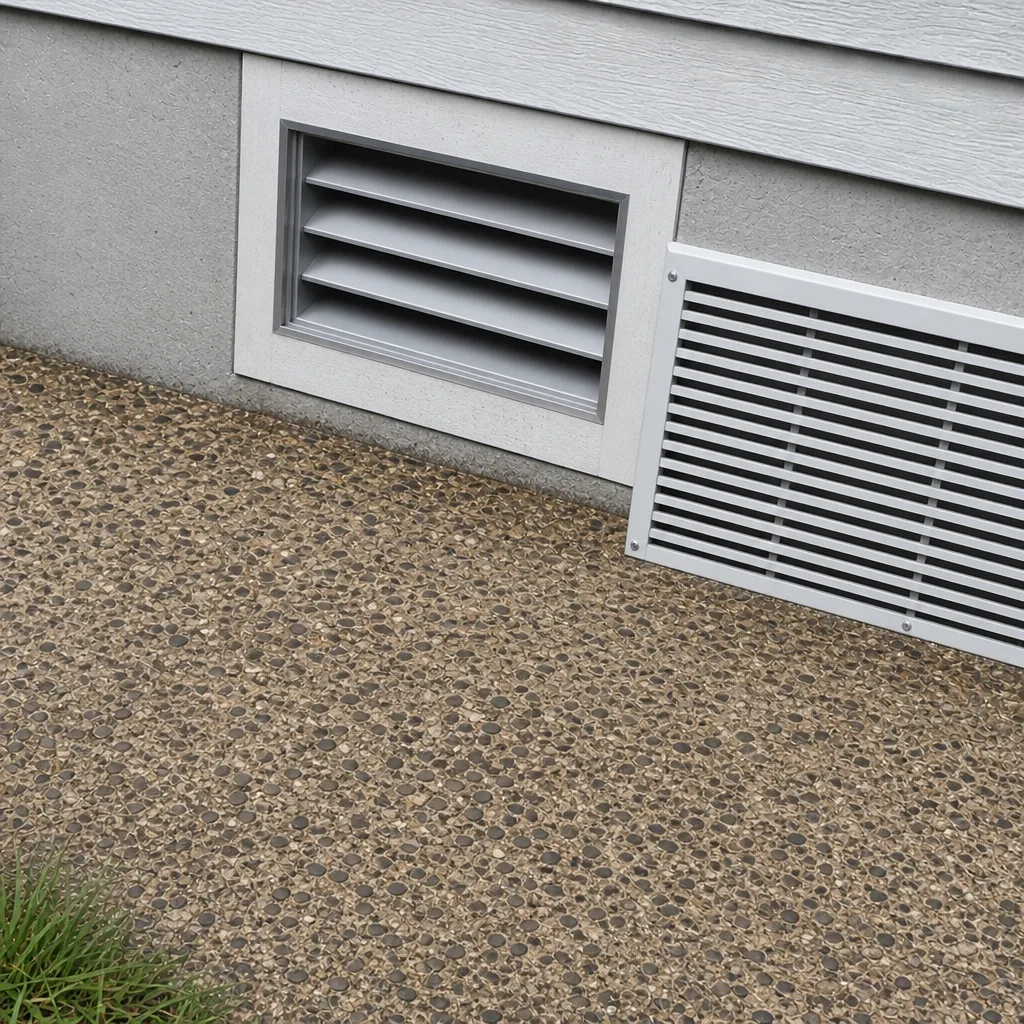 After
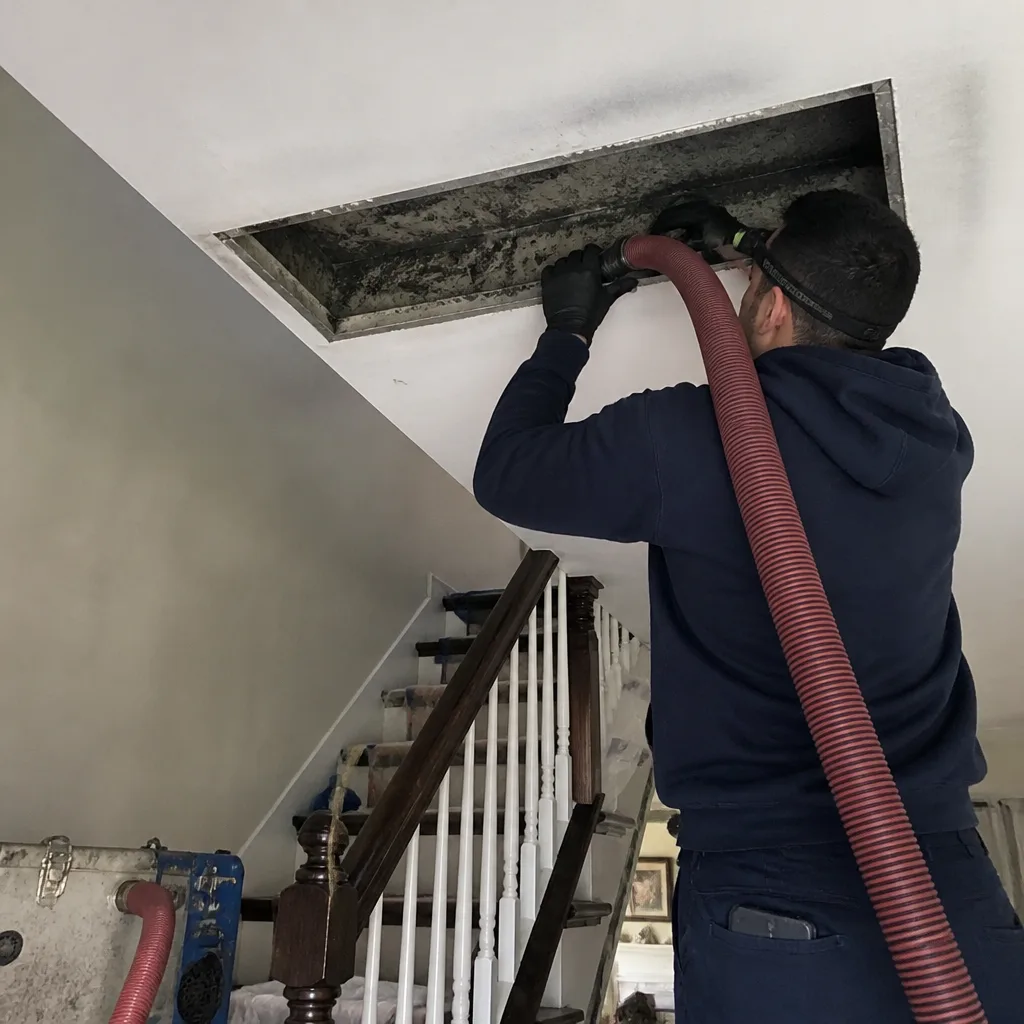 Before
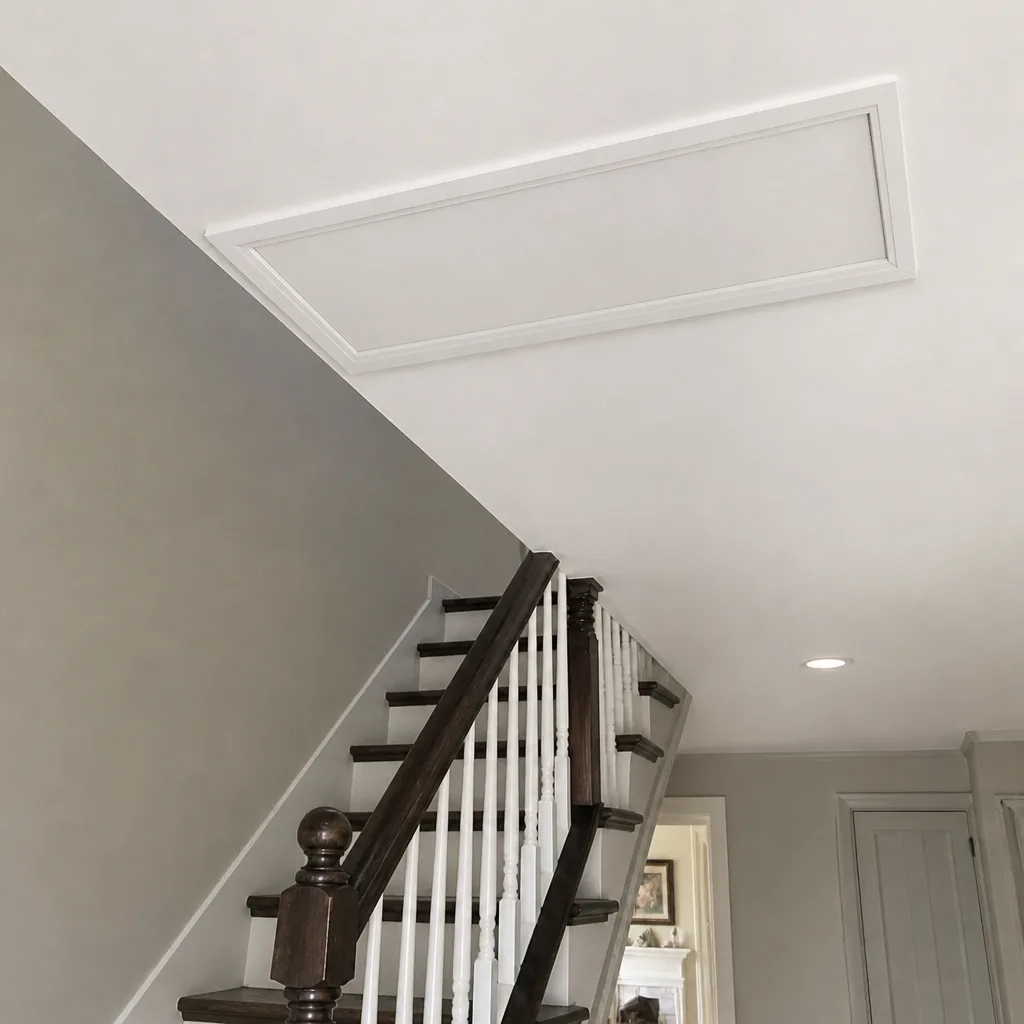 After
When to Call a Professional
Duct cleaning isn’t a yearly obligation for every home, but there are clear signals that the system needs attention. Call for an estimate if you’re seeing dust blowing out of supply registers just after the heating cycle kicks on, or if you notice a musty smell that comes back whenever the air runs. Renovation dust in an Inwood co-op is a strong reason: drywall and construction debris settle deep in returns. So is a system that’s never been serviced, especially in an older multi-unit building. Dryer vent cleaning is a separate safety call. Lint-backed vents restrict airflow and can become a fire risk, and the work is worth doing even if the rest of the system is fine. Air Duct Cleaning Inwood offers free estimates in Inwood. Call (855) 974-7305. We answer 24/7. Fast dispatch from 7am to 7pm, Sunday through Friday.
Frequently Asked Questions
There’s no single best brand, but the recognized professional systems are Rotobrush for rotary agitation and Nikro or Abatement Technologies for high-CFM source removal with HEPA filtration. The right choice depends on your duct layout and the contamination level. In Inwood’s multi-family homes and older buildings, we usually recommend a combination approach: rotary brushing at each register plus negative-pressure extraction on the trunk lines. Call (855) 974-7305 for an exact quote. Estimates are free.
A quote far below the rest is usually priced per vent, and the final invoice grows once the technician is on site; that’s the bait-and-switch the trade is known for. A professional-grade job with real equipment costs what it costs, and honest providers price per system, not per vent. Ask for a written flat price per system before you book. Call (855) 974-7305 for an exact quote. Estimates are free.
You know because you can see it: before-and-after photos of your own ducts, vacuum pressure readings from the source-removal unit, and a written summary of what was found. Any provider who can’t give you those results isn’t giving you a verifiable job. Call (855) 974-7305 to schedule a free estimate.
Most Inwood homes don’t need annual duct cleaning. A reasonable interval is every few years, and sooner if you’ve had renovation, water intrusion, a long vacancy, or a change of occupants. Homes with pets, allergy-sensitive occupants, or older systems benefit from checking more often. If your ducts have never been serviced, one thorough cleaning with verification matters more than a yearly reminder. Call (855) 974-7305 for an exact quote. Estimates are free.
Yes, when it’s a professional-grade portable Nikro or Abatement Technologies unit, run at proper negative pressure. Truck-mounted systems move more raw airflow but can’t reach a third-floor trunk main in an Inwood walk-up. Portable source-removal systems hit the required CFM; consumer vacuums don’t, regardless of how they’re mounted. Ask which system the provider will use and whether it matches your building. Call (855) 974-7305 if you’d like an estimate.
We can, and it’s often worth doing because the dryer vent is a separate safety issue from the HVAC ducts. Lint buildup in a long Inwood wall cavity can restrict airflow and become a fire risk. Not every duct cleaning provider even offers dryer vent cleaning as a standalone service. Call (855) 974-7305 to include it in your estimate. Estimates are free.
The Bottom Line
The equipment inside the truck tells you more about a duct cleaning brand than the review count ever will. Rotobrush (rotary agitation) and Nikro or Abatement Technologies (high-CFM source removal with HEPA filtration) are the professional systems behind an honest job, and the combination is what most Inwood homes actually need. Ask any provider to name their equipment, describe their extraction method, and show vacuum pressure readings. Insist on a flat price per system, not a per-vent teaser. Then verify with photos of your own ducts before the team leaves. Once you’re asking those questions, the choice of brand gets easier, because the difference between a real clean and a surface one stops being invisible. Air Duct Cleaning Inwood’s technicians have up to 8 years of experience, and we work Rotobrush, Nikro, and Abatement Technologies equipment on every job. Call (855) 974-7305 for a free estimate. We answer 24/7. Fast dispatch from 7am to 7pm, Sunday through Friday.
Written by the team at Air Duct Cleaning Inwood.